Automation Doesn't Replace Craft. It Protects It.
It is not about reducing headcount and saving money. It is about realigning your business to focus on what matters to you the most and what makes your brand unique and valuable to your customers.

Quick Pour
There's a version of the automation conversation that goes like this: technology comes for the craft. Machines replace people. The handmade thing becomes the machine-made thing, and something essential gets lost. We hear it regularly from producers, and the concern deserves more than dismissal.
But we've come to see the relationship differently. After several years of building and using AI systems inside a working production business, the pattern is consistent. Automation doesn't replace craft. It protects it.
The non-value-add target list
The key distinction is what gets automated. Not the craft itself. Not the tasting, the blending, the quality judgements that require experience and instinct. What gets automated is everything around those things that consumes time without creating value.
Invoicing. Email management. Administrative checklists. Purchase orders. Stock level monitoring. Compliance documentation. Scheduling. Basic customer queries. These are the tasks that eat hours out of every week for a small team, and not one of them is why anyone started a drinks business.
Nobody starts a business for love of admin. And customers don't buy into brands because of administrative strength.
When a six-person company automates the non-value-add layer, those hours come back. Not as profit on a spreadsheet, but as time and headspace that gets reinvested into the work that actually matters: making the products better, improving taste, working the supply chain for better margins, and keeping customers, staff, and the bank manager happy.
The British Chambers of Commerce found that 54% of UK firms are now actively using AI, with limited headcount impact so far. That last detail matters. The businesses adopting AI aren't cutting people. They're redirecting people toward higher-value work. The BCC's research shows the same pattern we see with clients: automation changes what people spend time on, not whether they have jobs.
The reframe
It is not about reducing headcount and saving money. It is about realigning your business to focus on what matters to you the most and what makes your brand unique and valuable to your customers.
That reframe changes the entire conversation. When you think of automation as a cost-cutting tool, every implementation feels like a concession. Something human being handed to a machine. When you think of it as a craft protection tool, the logic flips. Every hour reclaimed from admin is an hour returned to the work that makes your products worth buying.
| Automation as cost-cutting | Automation as craft protection |
|---|---|
| Goal: reduce headcount | Goal: redirect focus |
| Targets: any task a machine can do | Targets: non-value-add tasks specifically |
| Measures success by: money saved | Measures success by: time returned to craft |
| Risk: losing expertise | Risk: minimal (expertise stays, admin leaves) |
| Feels like: something taken away | Feels like: something given back |
For small teams especially, brainpower is always limited. There are only so many decisions you can make well in a day, only so much creative energy available before the admin pile drains it. Haskell's research on craft distillery automation puts it plainly: automation is "a digital assistant capable of monitoring, controlling and recording aspects of the process, thus freeing you to focus on the craft." Their work with distilleries including Tullamore Dew and Glenfiddich shows that even heritage brands with centuries of tradition find that purposeful automation enhances rather than diminishes their craft.
The fear is valid. But the opportunity is real.
We should be honest about the wider context. The fear about AI and employment is 100% valid. In the broader marketplace, concerns about replacement and displacement are serious and deserve serious engagement. We don't dismiss any of that.
But for small business owners, the dynamic is different. Entrepreneurs control their destiny and can choose which solutions to use. The tools are democratic. And the best thing any entrepreneur can do right now is learn the tools and implement them on their own terms, for their own purposes, in ways that serve their business rather than being imposed on it.
Knowledge has been democratised and this is a huge opportunity for small businesses. This is where Absolution Labs comes in. We bring the tooling to businesses and help them build the best version of themselves as a company.
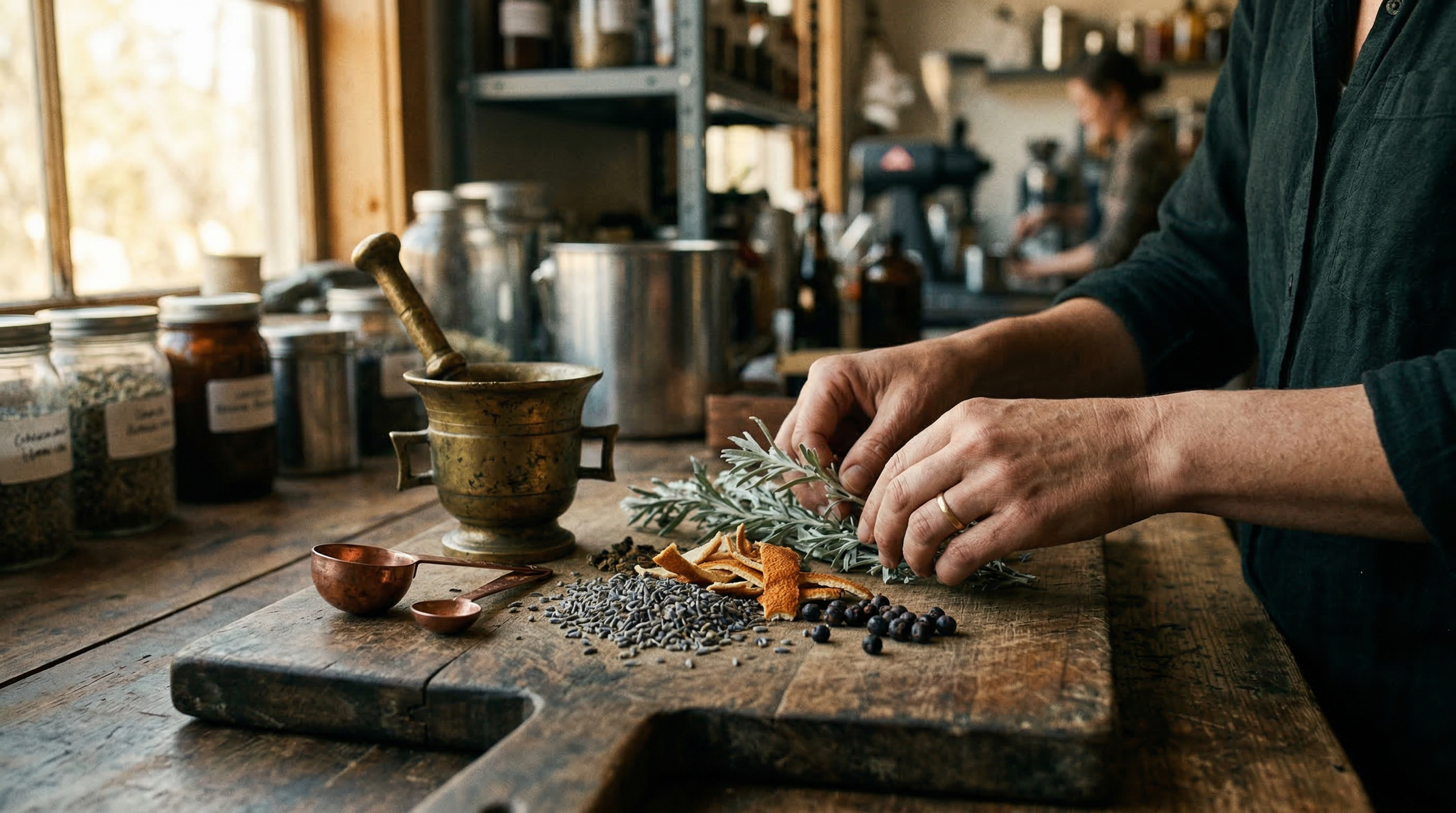
That's not a sales pitch. It's the principle that drives everything we build, at Absolution Labs and at Asterley Bros. The vermouth still gets made by hand. The botanicals still get weighed and measured and macerated by people who care about the outcome. What's changed is that those people spend more of their time on the craft and less on the paperwork. And the products are better for it.
Frequently asked questions
Does automation threaten craft production in the drinks industry?
No. When implemented thoughtfully, automation targets non-value-add processes like invoicing, stock ordering, email management, and administrative checklists. This frees time and mental energy for craft work: product development, quality control, recipe refinement, and customer relationships. The goal is not headcount reduction but reallocation of focus toward what makes a brand unique.
What tasks should small drinks producers automate first?
Start with non-value-add processes that consume disproportionate time: invoicing, purchase orders, stock management, email triage, compliance checklists, and basic customer queries. These tasks don't differentiate your brand and don't require craft expertise. Automating them returns time to production, product development, and relationship building.
Is the fear of AI replacing jobs in craft production valid?
The broader fear about AI and employment is valid and worth taking seriously. But for small business owners, the dynamic is different. Entrepreneurs control their own destiny and can choose which tools to adopt and how. Nobody starts a business for love of admin, and customers don't buy into brands because of administrative efficiency.
How does Absolution Labs help small drinks businesses with automation?
Absolution Labs is an AI automation consultancy that works specifically with drinks businesses. The approach focuses on identifying non-value-add processes, building targeted automation, and helping producers redirect time toward craft, product quality, and growth.
Robert Berry is co-founder of Asterley Bros, a London-based premium aperitivo company, and Absolution Labs, an AI automation consultancy for drinks businesses. He makes vermouth by day and builds AI systems in the margins.