Why the Drinks Industry Is About to Have Its AI Moment
The drinks industry is years behind on AI adoption. That means there's runway. A producer's perspective on what's happening and why it matters for small makers.

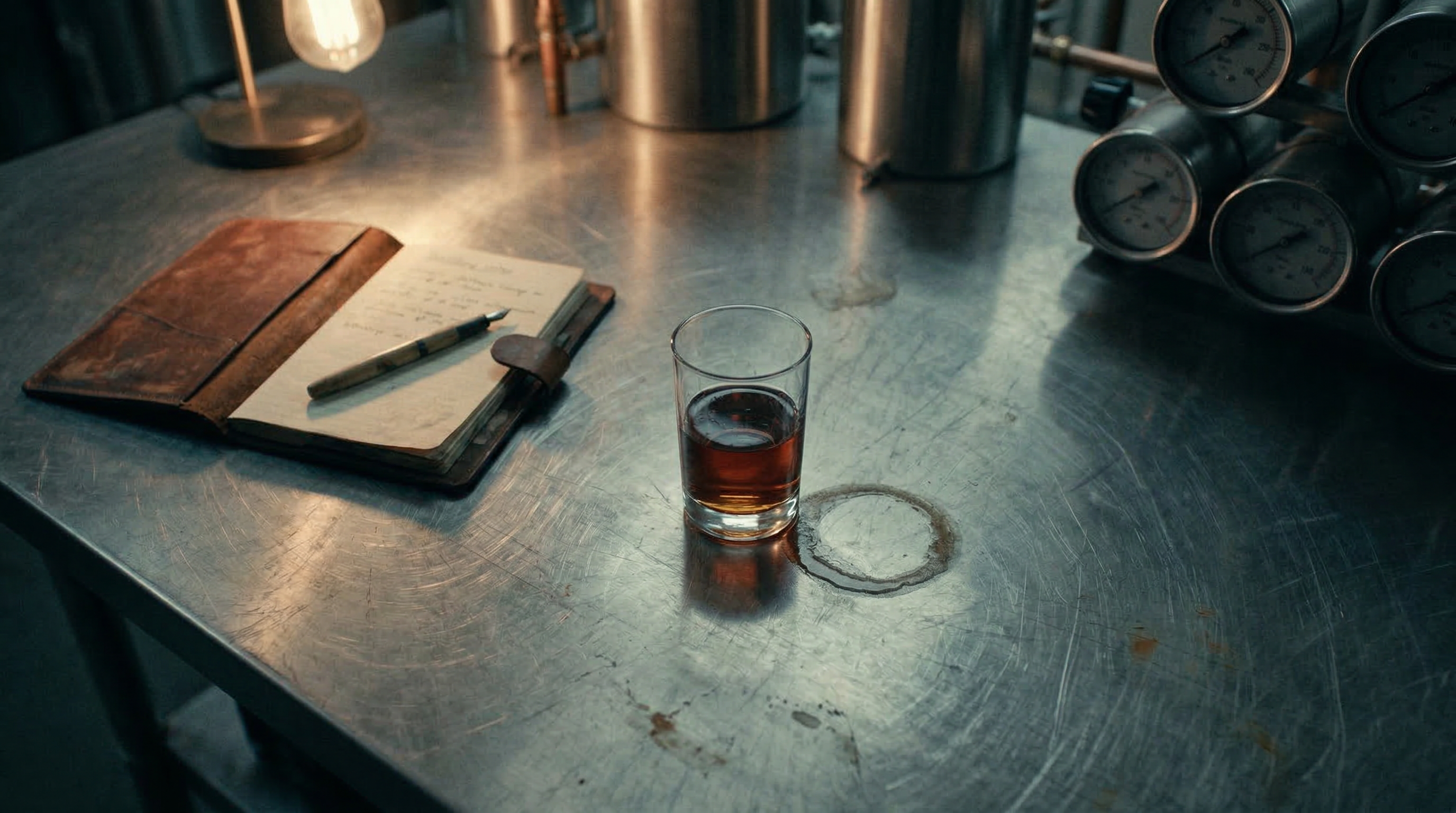
Last Tuesday afternoon I was standing in our production space in South London, surrounded by wormwood and gentian and about forty other botanicals we use in our amaro and vermouth. I was tired. We'd just finished a huge batch of macerations and there were botanicals everywhere. With my iPhone propped up against a barrel I started talking to a Claude instance I'd spent a few hours loading up with our production data, recipe notes, historical batch records and loads of other production related data. Almost all of it in fact.
I asked it to cross-reference yield discrepancies we'd noticed across three amaro batches from the previous quarter. Thirty seconds and it was done.
That job used to take me a whole morning of pulling records, running comparisons, flagging anomalies, digging into spreadsheets (and sometimes post-it's too). Standing there with red wine stains on my apron thinking: right. This is actually happening!
I've been on both sides of this AI / drinks manufacturing divide for a while now. I co-founded Asterley Bros, where we make vermouth, amaro and fernet out of our production space in South London. Small batch, botanically complex, deeply traditional in how we produce. I also co-founded Absolution Labs, an AI automation consultancy that works with drinks businesses on exactly these kinds of systems. So I live inside the tension. I'm both the maker and the technologist. The person worrying about whether the fernet tastes right, and also the person building tools to help us understand why it does or doesn't.
That dual perspective is what this blog's about. But first, where the industry actually is.
The State of Play
At ProWein 2025, a panel of industry figures got together at The Spirits Business Hub to talk about AI in drinks. The conversation was refreshingly honest. Danny Cooper, chief information and digital officer at Virgin Wines, didn't hold back at all. The alcohol industry, he said, is "hugely, hugely behind". His estimate was that on an e-commerce and tech level, the sector is probably ten to fifteen years behind most other industries.
José Amado-Blanco put it even more plainly: "Especially in AI, we're very, very behind."
I want to be careful here though, because "behind" can easily sound like a dig at an industry I genuinely love and have given a big chunk of my working life to. It really isn't. The drinks industry's caution around technology isn't ignorance, it's wisdom that's been built up over centuries of production.
Think about what we're actually dealing with here. Ingredients that change year on year depending on weather, soil and supplier. Processes that rely on microbial activity nobody fully controls. Consumer relationships built on trust, occasion and memory. Regulators on every side. When you make vermouth, you're managing the relationship between dozens of botanicals and a base wine and an oxidative process and a market that expects a consistent product every single time. That's proper craft. And the wariness about technology is completely baked into how good drinks get made.
Fashion, which Cooper cited as an early tech adopter, doesn't have to worry about raw ingredients being slightly different every harvest. Doesn't have the production timescales of Scotch whisky or the cultural weight of a century-old Cognac house.
So yeah, we're behind. But behind also means there's runway. The compounding advantages that early movers in other sectors built over twenty years are still available to drinks businesses right now. And some people are already running with it.
What's Already Happening
The examples that exist already are worth looking at properly rather than just hand-waving at them as proofs of concept.
Diageo's "What's Your Whisky?" tool uses AI-powered flavour profiling to match consumers to whiskies. The underlying tech, called FlavorPrint, draws on consumer insights and master distiller expertise to generate personalised recommendations. It's live in travel retail and at the Johnnie Walker Princes Street experience in Edinburgh. Not a gimmick at all. It's a genuinely useful consumer tool that also generates data Diageo couldn't capture at scale otherwise.
Bespoken Spirits in Menlo Park has built a machine learning process that compresses whiskey maturation from years to days. Their ACTivation technology forces the interaction between spirit and wood, actively controlling the chemical reactions instead of passively waiting on time and climate. The traditionalists hate it, and honestly I get why. But it's won competition medals and it raises genuinely interesting questions about what "aged" actually means when you strip it back.
In Bristol, Circumstance Distillery built a neural network called Ginette and trained it on thousands of botanical combinations, gin recipes and flavour relationships. The result was Monker's Garkel, a gin that went on to win a silver medal at the 2020 London Spirits Competition. Ginette didn't just generate the recipe either. She chose the name, helped design the label and wrote the back-of-bottle copy. The distillery calls itself Britain's most innovative distillery, and honestly, fair enough.
California-based Tastry analyses the chemical makeup of wines and, using machine learning against a database of millions of consumer taste profiles, predicts which consumers will like which products before the wine even hits shelves. Their CompuBlend system takes it further by simulating formulations against consumer data to help producers create market-ready blends. It's analytical chemistry meets AI, and twenty years ago this would've needed a university research programme to pull off.
Over on the DTC side, Napa Valley's Goosecross Cellars deployed an AI concierge called Goose on their website, built with startup WineSpeak.ai. It guides visitors through the winery's portfolio, answers questions, helps book tastings and suggests wine club memberships. After deploying it they saw a considerable engagement bump heading into the holiday season.
In the vineyard, Tule Technologies makes sensors that measure actual evapotranspiration (real-time crop water use). It gives growers daily stress monitoring and irrigation suggestions at a precision that gut instinct and soil sampling just can't touch.
And Treasury Wine Estates' 19 Crimes brand turned AR labels into a genuine commercial phenomenon: 5.5 million downloads of their Living Wine Labels app and a 40% increase in case volume sold. The convicts on the label literally come to life and tell their stories when you scan them. Gimmicky in the absolute best way, and it worked brilliantly.
None of these are hypotheticals. All live, all generating real results.
Where It Gets Interesting for Makers
I want to put on my producer hat here, because the examples above are mostly big companies or well-funded startups. What does this actually mean for smaller makers? The independent distillery, the craft vermouth producer, the family vineyard?
My honest experience, having worked directly at that scale for years now, is that the most transformative applications aren't the flashy ones. They're the unglamorous operational stuff that nobody writes LinkedIn posts about.
Formulation and recipe development is the first place I'd point anyone. I've used AI tools to model botanical combinations, cross-reference historical batches with flavour outcomes and suggest adjustments when a maceration comes out running hot or thin. It doesn't replace tasting, and nothing ever will. But it compresses the hypothesis-generation phase massively, so instead of a month of trial batches you can narrow the space before you even start.
Quality control and consistency matter enormously when you're small. Your volumes are low enough that one bad batch is a meaningful percentage of your entire year. AI-assisted pattern recognition across batch data (yield, ABV, sensory panel scores, shelf-life observations) can surface anomalies before they become actual problems. The yield analysis I mentioned at the top is exactly this.
Demand forecasting is genuinely hard for small batch producers, and getting it wrong costs you either way. Too much stock ties up cash. Too little loses sales. Machine learning on your own historical data, layered with seasonal patterns and market signals, can seriously improve this even with relatively small datasets if you set it up carefully.
Customer insight for DTC is where I'd put real energy if I were starting fresh today. If you're selling direct to consumers, and more and more small producers are, you've almost certainly got data you're not fully using. Purchase patterns, repeat behaviour, product combos, drop-off points. AI helps you understand what that data's actually telling you and then do something useful with it.
Content and marketing is the most immediate win for almost every small producer I've worked with through Absolution Labs. A two-person team that also makes the product simply can't produce the volume of content that digital channels demand these days. AI doesn't give you a voice, you still need a genuine point of view, but it amplifies the one you've got and takes the blank page problem off the table.
The Tension
I want to be honest about something here. I think it's the question that sits underneath every conversation about AI in craft drinks, and it deserves a straight answer.
When you say "AI-made gin" or "algorithm-assisted vermouth," something in the producer's gut tightens. Mine does too. We're in this because we believe in the human act of making things. The intention, the judgment, the accumulated knowledge of what a great batch smells like at two in the morning when you're the only one in the building. That matters enormously.
But I've come to think the tension is slightly false.
The thermometer didn't make the brewer's palate irrelevant. The refractometer didn't replace the winemaker's instinct. The gas chromatograph didn't end the master blender's career. Every tool that's ever given producers better data has made human expertise more valuable, not less, because suddenly you're applying intuition to a sharper picture of what's actually happening.
AI is a tool. A more powerful one than most we've had before, sure. But the maker's role, all the decisions about what to make, why to make it, what it should taste like, what story it tells, what it means to the person drinking it, none of that gets automated away. If anything, removing friction from the operational and analytical work just gives you more time for the creative and human parts of what we do.
The authenticity question isn't "did a computer touch this product?" Every product in every industry has been touched by software somewhere in its supply chain. The real question is whether the values, judgment and intention of the maker are present. And those can't be delegated to anything.
Why This Blog Exists
I've been operating at this intersection (hands in the botanicals, head in the models) long enough that I've got things I want to say about it. And I genuinely can't find them being said clearly anywhere else.
Most AI content for the drinks industry comes from one of two places: tech vendors who understand the tools but not the production reality, or industry veterans who understand the craft but are understandably wary of the tools. Neither perspective is wrong but neither is complete either.
What I want to write here is honest. What actually works, from someone who's tried it on real batches with real consequences. What's overhyped. Where the line sits between a useful tool and a distraction dressed up in fancy vocabulary. What small producers can actually implement with the resources they have, not the resources a corporate innovation budget assumes.
I'll write about formulation experiments and the AI systems we've built at Absolution Labs and what clients found when they tried to use them for real. I'll write about the failures too, the batches that taught us something and the automations that didn't automate anything useful. The places where the technology surprised me, and the places where a long walk around the building and a good notebook turned out to be the better answer.
This is a South London workshop perspective, not a Silicon Valley one. Real stakes and thin margins. The botanicals don't care about your product roadmap.
Pull Up a Stool
If any of that sounds useful, whether you're a producer trying to figure out where to start, a drinks professional watching this space with interest, or just someone curious about what actually happens when craft and technology properly collide, I'd love to have you here.
Subscribe below and I'll write when I've got something worth saying. No cadence promises and no content calendar. Just honest dispatches from the intersection.
There's always a stool at our bar.
Frequently asked questions
How is the drinks industry using AI in 2026?
Applications range from Diageo's AI-powered whisky recommendation tool FlavorPrint, to Bespoken Spirits' machine learning accelerated maturation, Circumstance Distillery's neural network Ginette for gin recipe design, Tastry's chemical analysis and consumer taste matching, and Goosecross Cellars' AI concierge for DTC wine sales.
What are the most valuable AI applications for small drinks producers?
Demand forecasting, batch anomaly detection, recipe hypothesis generation, customer insight from DTC data, and content scaffolding for marketing. The unglamorous operational applications typically deliver more value than the creative ones.
Does AI threaten craft authenticity in spirits production?
The tension is real but the framing is slightly false. Every measurement tool in production history, from thermometers to gas chromatographs, has made human expertise more valuable by giving producers better data to apply their judgement to. AI is a more powerful tool but the maker's creative decisions cannot be delegated.
Where should a small spirits producer start with AI?
Content scaffolding for marketing is the most immediate win. Demand forecasting on existing sales data delivers measurable ROI. Batch analysis with an LLM loaded with your production data can surface anomalies you would miss manually. All three are accessible without enterprise budgets.
Robert Berry is co-founder of Asterley Bros, a London-based premium aperitivo company, and Absolution Labs, an AI automation consultancy for drinks businesses. He makes vermouth by day and builds AI systems in the margins.